
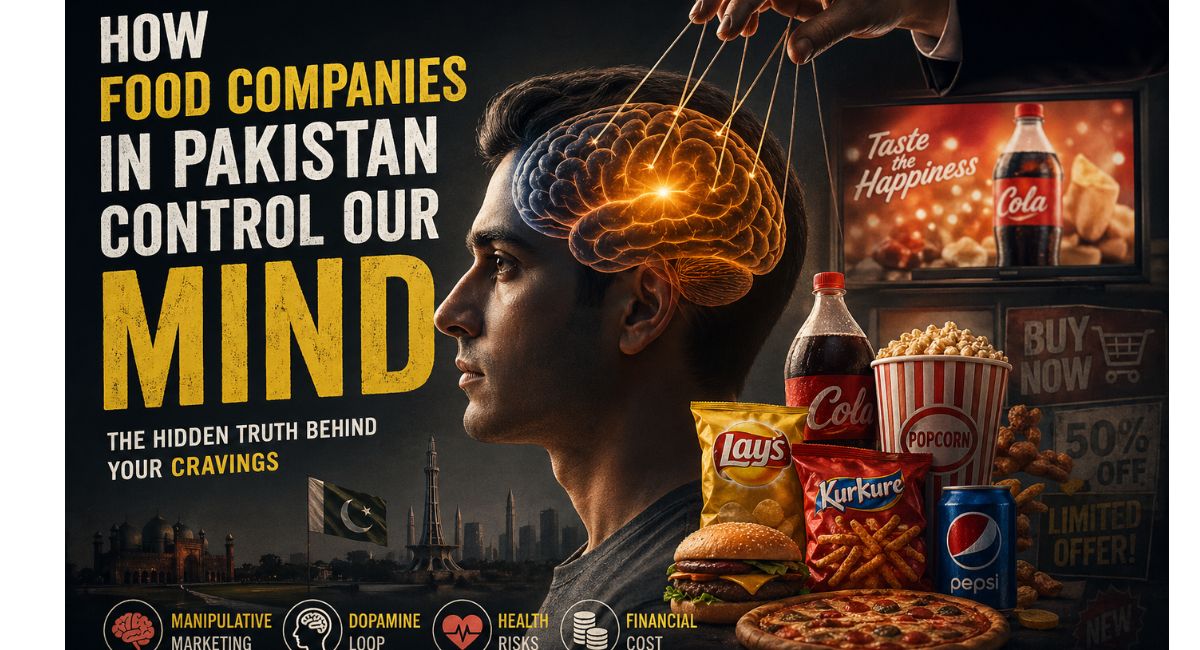
In Pakistan, food and beverage companies invest heavily in advertisements across TV, digital platforms, and billboards. Their goal is not just visibility, but emotional conditioning.
You are repeatedly shown the same message: happiness, friendship, and celebration are incomplete without their products. This repetition creates familiarity, and familiarity slowly turns into trust. That trust is what drives consumption, even when there is no real need.
If you want to understand how this manipulation extends beyond food, read our detailed analysis on how small financial tricks like paisa rounding impact consumers in Pakistan, where we expose hidden micro-charges in daily life transactions.
What is Neuromarketing and Why It Matters?
Neuromarketing is a combination of neuroscience and marketing. Companies study how the human brain reacts to visuals, emotions, and repeated exposure to design advertisements that directly influence decision-making.
When you see smiling families drinking soft drinks or enjoying snacks, your brain links those products with happiness. Over time, this connection becomes automatic, and you start craving these products in similar situations.
This is not guesswork, it is science-based behavioral influence and we are going to break it down as to how 5 shocking ways food companies control your mind.
For a broader view of digital and financial manipulation systems, you may also find our article on mobile balance deductions and hidden telecom charges in Pakistan highly relevant.
The Psychology Behind Cravings and Dopamine Effect:
Cravings are not always related to hunger. They are triggered by psychological cues such as advertisements, social situations, and memories.
Food companies design products to activate dopamine, a brain chemical responsible for pleasure and reward. Once your brain experiences that reward, it wants to repeat it again and again. Below is a cycle or 5 Shocking Ways Food Companies Control Your Mind:
trigger → craving → consumption → pleasure → repeat
Over time, this cycle becomes difficult to break and feels like natural behavior.
How Habits Are Built Without Awareness:
Habits do not form instantly. They are created through repeated exposure and reinforcement.
In Pakistan, children grow up seeing snacks, cold drinks, and packaged foods as part of every celebration. Slowly, these products shift from “occasional items” to “essential items.”
What starts as marketing eventually becomes culture.
Similarly, the same mindset-driven marketing tactics are also shaping other industries in Pakistan, which we discussed in our piece on lack of quality automotive services and consumer dependency on substandard options.
Health Impact: Backed by Global Data:
This is where the issue becomes serious.
According to the International Diabetes Federation (IDF), Pakistan has experienced a massive rise in diabetes cases. In 2021 alone, around 33 million adults in Pakistan were living with diabetes, making the country one of the highest in the world for diabetes burden.
WHO and IDF reports also highlight that approximately 1 in 3 adults in Pakistan is affected by diabetes, showing how widespread the issue has become.
The situation has worsened significantly over the years. Studies show that diabetes cases in Pakistan increased from around 5 million in 2000 to more than 33 million by 2021.
At the same time, rising consumption of processed food, sugary drinks, and fast food is strongly linked with this health crisis.
These are not just numbers, they represent a growing national health emergency.
The Situation in Pakistan: A Cultural Shift:
In Pakistan, processed food is no longer occasional but it has become routine.
Soft drinks are served at almost every gathering. Packaged snacks are treated as essential for travel. Fast food has replaced traditional meals in many urban households.
This shift is not organic. It is the result of consistent exposure to marketing that connects food products with happiness, convenience, and lifestyle.
Over time, this has created a society where consumption is emotionally driven rather than necessity-driven.
The Real Mechanism Behind Mind Influence:
Food companies do not sell food alone, they sell emotions. Their messaging is built around ideas like:
- Happiness is sharing a drink
- Celebration is incomplete without snacks
- Friendship is eating together
At the same time, product formulas are engineered to maximize taste stimulation and dopamine response. This combination of emotional storytelling and chemical design creates strong behavioral influence.
What Happens in the Long Run?
The long-term effects are visible across Pakistan. Rising rates of obesity, diabetes, and heart disease are directly linked with dietary changes and increased processed food consumption. At the same time, families are spending more on healthcare and less on prevention.
This creates a cycle where both health and financial stability are affected.
Breaking the Cycle: Awareness is the First Step:
The solution is not complete avoidance but awareness.
When you understand how these systems work, you begin to notice triggers, ads, habits, and emotional cues. That awareness helps you make conscious decisions instead of automatic ones. Even small lifestyle changes can significantly reduce long-term risk.
Conclusion:
Food companies are not just selling products, they are shaping human behavior. With billions spent on marketing and powerful psychological techniques, they influence how we think, eat, and celebrate.
Understanding how food companies in Pakistan control our mind is the first step toward breaking this invisible system. Because once you see the pattern, you can no longer be controlled by it.
FAQs:
Q.1: How food companies in Pakistan control our mind using psychology?
Answer: They use neuromarketing, emotional advertising, and dopamine-based product design to influence subconscious decisions.
Q.2: Is neuromarketing scientifically proven?
Answer: Yes, it is based on neuroscience and behavioral psychology studies that analyze brain responses to stimuli.
Q.3: Why are diabetes cases increasing in Pakistan?
Answer: According to IDF and WHO data, rising processed food consumption and lifestyle changes are major contributing factors.
Q.4: Are soft drinks and snacks directly responsible for health issues?
Answer: They are not the only cause, but high sugar and processed food consumption significantly increase health risks.
Q.5: Can people reduce this influence?
Answer: Yes, awareness and mindful consumption can significantly reduce the impact of marketing on behavior.

https://www.threads.com/@adilawan9298