
Life Expectancy in Pakistan 2026: Causes, Facts & Solutions:
Life expectancy in Pakistan has become a growing concern as more people, especially the youth, are facing serious health issues at an early age. Have you ever stopped and asked yourself why our grandparents often lived longer, calmer, and more satisfying lives, frequently reaching 80, 90, or even beyond? while today, even crossing 60 or 65 feels like an achievement in Pakistan? Their faces carried wrinkles, but also a sense of peace and strength that seems missing from modern life.
Today, we are seeing something even more concerning. Not only is the average lifespan relatively low now, but there is also a growing trend of young people facing serious diseases and even early deaths. This is no longer a rare occurrence but is becoming a pattern. The real question is not just why this is happening, but what we can do to stop it.
What Is the Current Life Expectancy in Pakistan?
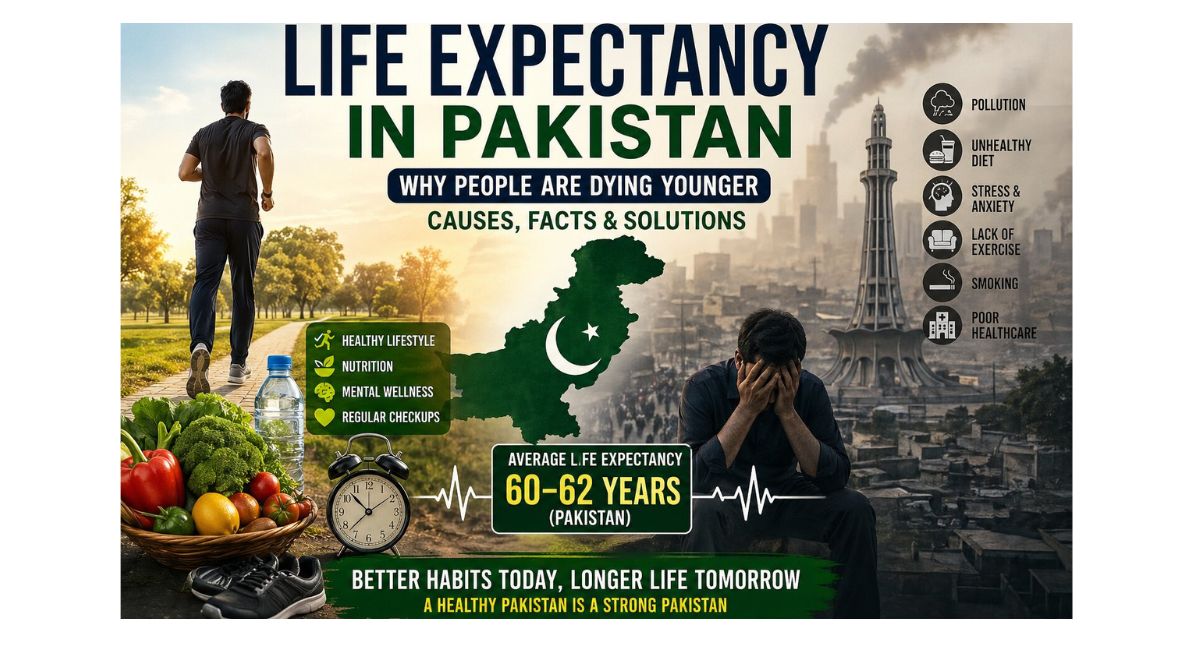
At present, the average life expectancy in Pakistan is around 60–62 years. When we look closer, there is a slight difference between genders. Men in Pakistan live approximately 59–60 years, while women tend to live slightly longer, around 62–63 years. Although women generally have a biological advantage and are less involved in risky behaviors like smoking and alcohol consumption etc, both figures remain significantly lower than global standards.
If we compare this with countries like Japan, Singapore, or Switzerland, where people live 82–85 years on average, the gap becomes alarming. This difference of more than 20 years clearly shows that something is seriously wrong, not just with healthcare, but with how we live our daily lives.
Then vs Now: What Changed in Pakistan?
In the past, life in Pakistan was simpler and more connected to nature. People consumed fresh, homegrown food, worked physically, and lived in strong family systems. Daily routines naturally included movement, social interaction, and mental peace. Life was not easy, but it was balanced.
Today, our lifestyle has shifted dramatically. We depend on processed food, spend long hours sitting, and remain constantly connected to screens rather than people. While we have gained convenience, we have lost the natural rhythm that once supported our health. This shift is one of the key reasons behind declining life expectancy in Pakistan.
Why Life Expectancy in Pakistan Is Low Now:
The rising number of early deaths, especially among young people, is not caused by one single factor. It is the result of multiple interconnected issues that have become part of modern life in Pakistan.
One of the biggest causes is unhealthy diet. Traditional meals have been replaced by fast food, sugary drinks, and processed items filled with chemicals. This has led to a sharp increase in obesity, diabetes, and heart disease. It is no longer uncommon to see people in their 20s or 30s suffering from conditions that once affected only the elderly.
Another major issue is air pollution, particularly in cities like Lahore and Karachi. Toxic air damages the lungs and heart over time, silently reducing lifespan. Along with this, contaminated water and poor sanitation increase the risk of infections and long-term health problems.
At the same time, physical inactivity has become a normal part of life. Many people spend most of their day sitting at work, at home, and even during leisure time. This lack of movement weakens the body, slows metabolism, and increases the risk of chronic disease.
Mental stress is another powerful but often ignored factor. Financial pressure, unemployment, and the constant comparison created by social media have pushed many individuals into anxiety and depression. This continuous stress affects the body internally, weakening immunity and accelerating aging.
In Pakistan, stress doesn’t always come from big problems it often builds from small, repeated frustrations that people face every day. One of the most common yet ignored issues is unexpected financial loss through unnoticed systems, such as mobile balance deductions and overpricing on purchase of vehicles. These deductions and over pricing may seem minor, but over time they create a sense of helplessness and constant mental irritation, especially for those already struggling financially.
In addition, harmful habits like smoking and vaping continue to rise, especially among young people. These habits damage vital organs and significantly increase the risk of early death.
Finally, the healthcare system in Pakistan also plays a role. Many people cannot afford proper treatment or delay visiting a doctor until the condition becomes serious. This results in late diagnosis, where diseases that could have been treated early become life-threatening.
What Are the Main Causes Of Low Life Expectancy in Pakistan?
When we look at the overall picture, the leading causes of death in Pakistan are largely preventable. These include heart disease, stroke, diabetes-related complications, respiratory illnesses, and infections. What is concerning is that many of these conditions are directly linked to lifestyle choices.
This means that a large percentage of deaths in Pakistan are not unavoidable, they are the result of daily habits that can be changed.
To understand the seriousness of the issue, it helps to compare Pakistan with other countries:
| Country | Average Life Expectancy |
| Japan | 84–85 years |
| Singapore | 83–84 years |
| Switzerland | 83–84 years |
| South Korea | 82–83 years |
| USA | 76–77 years |
| Pakistan | 60–62 years |
This comparison clearly shows that longer life is not just about wealth, but it is about lifestyle, awareness, and systems that support health.
The Real Solution: How to Improve Life Expectancy in Pakistan?
The situation may seem serious, but it is not hopeless. The solution does not lie in complicated systems it starts with simple, consistent changes in daily life.
At an individual level, people need to return to basic healthy habits. This includes eating fresh, home-cooked food instead of relying on processed meals, staying physically active through daily walking or exercise, and reducing sugar and unhealthy fats. Avoiding smoking and harmful substances is also critical for long-term health.
Mental health must also be taken seriously. Reducing unnecessary stress, limiting social media usage, and building strong relationships with family and friends can significantly improve both mental and physical well-being. Humans are social beings, and emotional connection plays a vital role in longevity.
Equally important is preventive healthcare. Regular checkups, early diagnosis, and awareness about common diseases can help prevent serious health issues before they become life-threatening.
At a broader level, there is a need for improved public awareness, better healthcare facilities, and stronger policies to control pollution and food quality. While individuals can make changes, long-term improvement requires collective effort.
Final Thoughts:
The issue of life expectancy in Pakistan is not just about statistics but it reflects as a whole how we are living as a society. We have moved toward comfort, speed, and convenience, but in the process, we have moved away from health, balance, and peace.
Our grandparents may not have had modern technology, but they had something far more valuable a lifestyle that supported long-term well-being. Today, we have the knowledge and resources, but we often ignore the basics that truly matter.
The rising number of early deaths, especially among young people, is a warning sign. It is a reminder that progress without balance can come at a heavy cost.
The question is no longer just why life expectancy is low in Pakistan. The real question is what we are willing to change. We have gained ease, but lost discipline. We have increased comfort, but reduced health. If we continue on this path, the problem will only grow worse. But if we make conscious decisions starting from our daily habits, we can reverse this trend. A longer and healthier life is not built overnight, it is built through small, consistent choices made every single day.
Because in the end, true success is not just about living longer it is about living better.

https://www.threads.com/@adilawan9298